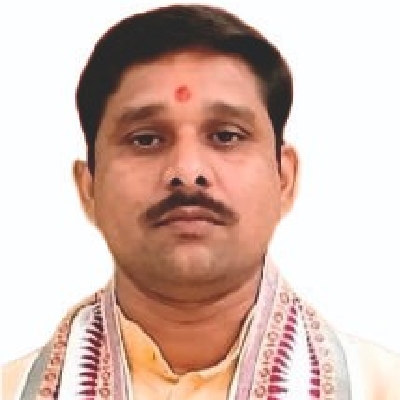
On behalf of Deen Dayal Shodh Kendra, Chhatrapati Shahu Ji Maharaj University, Kanpur, I extend my warm greetings and best wishes to all esteemed colleagues, scholars, students, and well-wishers.
Pandit Deen Dayal Upadhyay Ji was one of the foremost thinkers, philosophers, economists, and nation-builders of modern India. He propounded the philosophy of “Integral Humanism” (Ekatma Manav Darshan), which emphasizes balanced development of the individual, society, and nation rooted in Indian cultural values and human dignity. His vision continues to inspire academic inquiry, social harmony, self-reliance, and ethical public life.
The Shodh Kendra remains committed to promoting the ideals and vision of Pandit Deen Dayal Upadhyay Ji through academic research, intellectual discourse, publications, seminars, and meaningful programmes dedicated to Indian knowledge traditions, integral humanism, and national development.
We look forward to your continued cooperation and participation in our academic and cultural initiatives for the enrichment of society and the nation.
With regards,
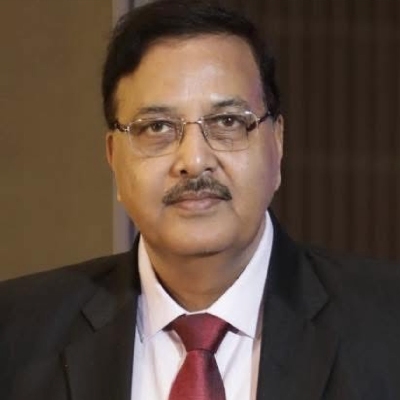
Prof. D. C. Srivastava
Director
Deen Dayal Shodh Kendra at Chhatrapati Shahu Ji Maharaj University, Kanpur, is an interdisciplinary academic and research centre established in recognition of the profound socio- economic and philosophical contributions of Pt. Deendayal Upadhyaya, one of the foremost thinkers of modern India.
The Centre was conceived as an extension of the UGC’s IX Plan initiative on “Epoch-Making Social Thinkers of India” and aims to promote research and academic discourse rooted in Indian intellectual traditions. The Shodh Kendra is dedicated to the study, interpretation, and dissemination of Pt. Deendayal Upadhyaya’s philosophy of Integral Humanism advocates the balanced development of the individual, society, and nation through harmony between material progress and spiritual values.
The Centre emphasises interdisciplinary studies in humanities, social sciences, Indian philosophy, culture, governance, and sustainable development. A major thrust area of the Shodh Kendra is promoting Indian Knowledge Systems in alignment with the objectives of the National Education Policy (NEP 2020).
The Centre promotes academic programmes and courses in areas such as Vaidika Karma Kanda, Jyotish Vigyan, Vastu Shastra, and Indian Knowledge Systems. It also encourages research on social harmony, rural development, women's empowerment, and the upliftment of marginalised communities in the spirit of Antyodaya. Through seminars, lectures, publications, training programmes, and collaborative research activities, the Deendayal Shodh Kendra aspires to emerge as a leading centre for value-based education, nation-building, and the revival of India’s rich civilizational heritage.
Download Brochure 2026-27
Deen Dayal Shodh Kendra
CSJM University, Kanpur
Duration: 2 Years (4 Semester)
Total No. of Seats : 50
Fee Structure : 10,200/-
Eligibility : A three/four-year Bachelor’s degree or equivalent any graduate degree awarded by a University or Institute established as per law and recognised as equivalent by this University shall constitute the minimum requirement for admission to the Master in Jyotirvigyan programme.
Programme Objectives : Jyotirvigyan is a scientific knowledge of the ancient India and there is an urgent need to rejuvenate this science in society to allow this scientific knowledge of Astrology to reach to the society at large and to provide opportunities to get this important knowledge exported to the entire world. The programme aims to equip students to get ancient Vedic astronomical and astrological facts in modern and scientific aspect.
SyllabusDuration : 1 Year (2 Semester)
Total No. of Seats : 30
Fee Structure : 11,200/-
Eligibility : A three/four-year Bachelor’s degree or equivalent any graduate degree awarded by a University or Institute established as per law and recognised as equivalent by this University shall constitute the minimum requirement for admission to the PG Diploma in Vastushastra programme.
Programme Objectives : The Diploma in Vastu Shastra is a specialized program that imparts knowledge and understanding of the ancient Indian science of architecture and spatial arrangement. Vastu Shastra is an integral part of the traditional Indian knowledge traditions and abundant literature has been written on this ancient scientific knowledge of India. The aim of this course is to make the general public aware of this important stream of Indian knowledge, orient them towards it and acquaint them with its rich textual tradition.
It is also known as the science of architecture.This science has evolved with the five elements of nature, where guidelines on the construction of buildings are very clearly mentioned. The five basic elements are earth, water, air, fire and space. The main objective of this shastra is to maintain a balance between man and material with the help of the basic elements of earth.
Vastu and Jyotish Shastra both are interconnected. Vastu Shastra is also a part of astrology. It comes under the Samhita part of astrology. Both Vastu and Jyotish are needed for our society.
SyllabusDuration : 1 Year (2 Semester)
Total No. of Seats : 50
Fee Structure : 9,200/-
Eligibility : Students who have passed the Intermediate examination with more than 45% marks from any recognized board will be eligible for this course.
Programme Objectives : Karm means action, karm and kanda means chapter. The method of action and its importance is discussed in Karmakanda. The meaning of Karmakanda is to follow the religious rites and rituals as instructed by Vedas, Puranas, Brahman Grants, Smritis, Agamas and Sutras etc.
Karmakanda is related to all religious rituals. It paves the way for the correct way of performing religious rituals, including the rules, prohibitions, etc. Like birth, Yajnopaveet, marriage, death etc.
Karmakanda is divided into three main parts, which are ancient and relevant too.
Only through rituals can a man get both worldly and spiritual benefits, for example wealth, property, children, salvation etc. In Mimamsa philosophy, subjects related to rituals have been specially propounded. Which subjects are especially needed in a person's life? Its scientific and systematic study is known as rituals. All the rituals related to a person's life. Their scriptural interpretation is called rituals.
In the present society, arbitrariness is visible everywhere. For the formation of a good society, there is a need for cultured, good-charactered, common people. In the formation of which, the importance of rituals increases. In its absence, the idea of a beautiful and civilized society is just a daydream. Therefore, in these circumstances, the usefulness of rituals increases even more.
A person proficient in rituals will work as a guide for the society. This will help in building a civilized society and the society will be culturally rich. By acquiring knowledge of rituals, a person will try to follow the teachings of the scriptures. “The process of living a lifestyle prescribed by the scriptures is called Dharma. In this way, society will be inspired to do Dharma-compliant work. And it will help in building a religious society. By acquiring knowledge of rituals, a person will try to avoid Adharma. It will also help in diverting the general public from various types of anti-social and anti-religious activities.
While living in society, a person performs many types of social duties, religious obligations and sixteen rites. A person having knowledge of rituals will be useful for the society and his earning will also be done in a Shastra-compliant way. That person will uplift himself along with the society throughout his life.
This course will prove useful for all sections of the society along with the students.
Directory does not exist.